Introduction
When people start dieting, they often look for foods that allow them to eat more without gaining extra calories. That is where 0 calorie foods become popular in weight loss discussions. These foods are usually very low in calories and high in water or fiber, which means the body uses almost as much energy digesting them as they provide.
In simple terms, they help you feel full without adding much to your daily calorie intake. But there is a lot of confusion around what “zero calorie” actually means, and whether such foods truly exist or not. In this article, we will break it down in a realistic, practical way so you can use it in your daily diet without misunderstanding or unrealistic expectations.
What Are 0 Calorie Foods?
Despite the name, true zero-calorie foods do not really exist. Every natural food contains at least some calories. However, some foods are so low in calories that they are often labeled as “0 calorie foods” in diet culture.
These foods usually have one or more of the following properties:
- Very high water content
- Extremely low carbohydrate and fat levels
- High fiber, which slows digestion
- Low energy density
Because of these factors, your body burns almost as many calories digesting them as they provide.
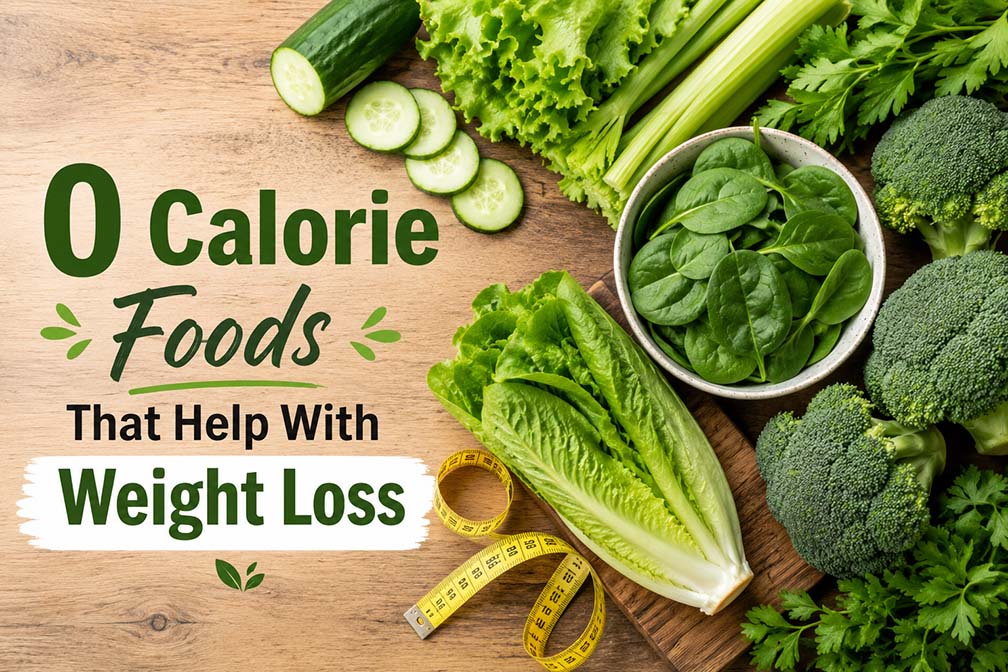
Common examples include vegetables like cucumber, lettuce, celery, and leafy greens.
How 0 Calorie Foods Help With Weight Loss
The idea behind using 0 calorie foods for weight loss is not magic, it is simple calorie control. Weight loss happens when you burn more calories than you consume. These foods help by filling your stomach without increasing calorie intake significantly.
Here is how they support fat loss:
1. Reduce Hunger Naturally
Foods like cucumber, lettuce, and cabbage take up space in your stomach. This signals fullness to your brain, which reduces the urge to overeat.
2. Lower Total Daily Calories
Since these foods are extremely low in calories, you can eat larger portions without going over your daily limit.
3. Improve Digestion
High-water and high-fiber foods support smooth digestion and reduce bloating.
4. Support Healthy Eating Habits
When you include these foods regularly, you naturally replace high-calorie snacks with healthier options.
List of Common 0 Calorie Foods (Practical Examples)
Below are some widely known foods that are extremely low in calories and often used in diet plans.
1. Cucumber
Cucumber is made up of more than 90 percent water. It is refreshing, hydrating, and extremely low in calories.
2. Lettuce
Lettuce is often used in salads and wraps. It adds volume to meals without adding significant calories.
3. Celery
Celery is crunchy and fibrous. It requires more chewing, which can also help reduce hunger.
4. Spinach
Spinach is rich in vitamins and minerals while staying very low in calories. It is ideal for smoothies and salads.
5. Zucchini
Zucchini can replace pasta in many low-calorie recipes.
6. Broccoli
Broccoli is filling, nutrient-rich, and supports digestion due to its fiber content.
7. Cauliflower
Cauliflower is often used as a rice or pizza base substitute in diet meals.
8. Lettuce Wraps
Used instead of bread or tortillas to reduce calorie intake.
9. Mushrooms
Low in calories and rich in umami flavor, making meals more satisfying.
10. Tomatoes
Hydrating and light, tomatoes are commonly used in salads and sauces.
Do These Foods Really Have Zero Calories?
The short answer is no. Even the lowest-calorie vegetables still contain small amounts of energy. However, the concept of 0 calorie foods is used because their calorie impact is so low that it becomes almost negligible in daily diets.
A more accurate way to think about them is “very low-calorie foods” rather than truly zero-calorie items.
For more scientific explanation, you can refer to Harvard Health Publishing:
https://www.health.harvard.edu/staying-healthy/are-there-negative-calorie-foods
How to Add These Foods Into Your Diet
If you want to use these foods for weight loss, the key is not just eating them alone, but combining them smartly with a balanced diet.
Simple ways to use them:
- Add cucumber and lettuce to every meal
- Replace chips with carrot or celery sticks
- Use zucchini instead of pasta
- Add spinach to smoothies
- Make salads your main meal side dish
Sample daily idea:
- Breakfast: Spinach omelette with cucumber
- Lunch: Grilled chicken with salad (lettuce, tomato, cucumber)
- Snack: Celery sticks
- Dinner: Cauliflower rice with vegetables
Benefits Beyond Weight Loss
These foods do more than just support calorie control.
1. Better Hydration
Most of them contain high water levels, which helps keep your body hydrated.
2. Improved Gut Health
Fiber helps maintain healthy digestion and reduces constipation.
3. Nutrient Support
Even though they are low in calories, they contain vitamins like A, C, K, and minerals.
4. Reduced Junk Food Cravings
Eating filling, low-calorie foods reduces the urge for processed snacks.
Common Myths About Zero Calorie Foods
There are many misunderstandings around this topic.
Myth 1: You can eat unlimited amounts
Reality: Overeating anything can still affect digestion and calories.
Myth 2: They burn fat directly
Reality: They support weight loss only by reducing calorie intake.
Myth 3: They are enough alone for dieting
Reality: You still need protein, healthy fats, and carbs for a balanced diet.
Simple Tips for Best Results
If your goal is fat loss, these practical tips can help:
- Focus on overall calorie balance, not just specific foods
- Combine vegetables with protein for better fullness
- Avoid processed sauces that add hidden calories
- Drink enough water daily
- Keep your meals consistent instead of extreme dieting
FAQs
1. Are 0 calorie foods real?
No, they contain very low calories, but not zero. The term is used for extremely low-energy foods.
2. Can I lose weight by only eating these foods?
Not safely. You need a balanced diet with protein, fats, and carbohydrates.
3. What is the best time to eat these foods?
You can eat them anytime, but they are most useful before meals to reduce hunger.
4. Are fruits included in 0 calorie foods?
Most fruits contain natural sugar, so they are not considered zero-calorie foods.
5. Can these foods replace meals?
They can support meals but should not fully replace them long term.
Conclusion
Using 0 calorie foods in your daily routine can be a smart way to reduce overall calorie intake without feeling constantly hungry. They are not magic foods, but they help you build better eating habits, improve digestion, and support steady weight loss when combined with a balanced diet. The key is consistency and balance, not restriction alone.
Read Also: Are M&Ms Gluten Free? Ingredients Explained