Introduction
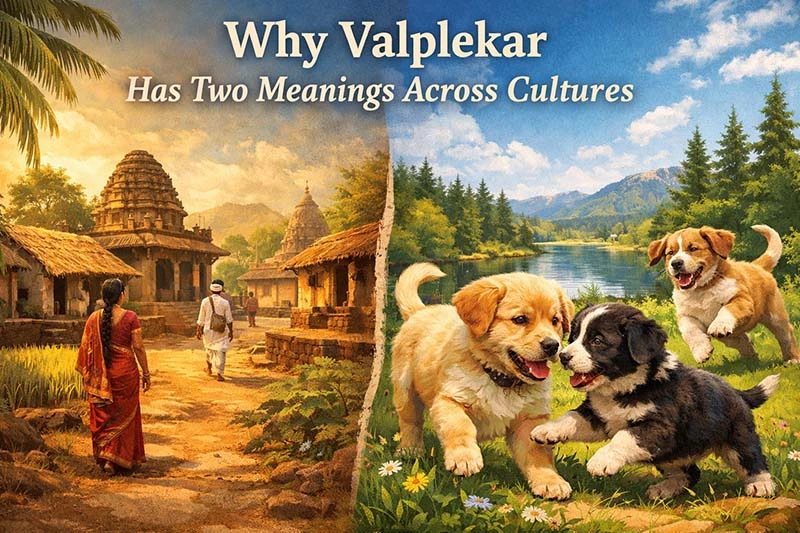
Language often creates fascinating surprises, especially when a single word carries entirely different meanings depending on geography and culture. The term Valplekar is a perfect example of how language, migration, and cultural identity intersect in unexpected ways. While many people encounter it as a family surname rooted in Indian naming traditions, others recognize it from a Scandinavian linguistic context connected to canine behavior. Understanding how one word developed two unrelated meanings reveals much about how languages evolve, how identities form, and why cultural context matters when interpreting words online.
How Names and Words Travel Across Cultures
Throughout history, words have crossed borders through migration, trade, and cultural exchange. However, not all similarities between words come from shared origins. Sometimes, entirely separate languages independently produce similar sounds or spellings. Linguists call this phenomenon false cognates — words that appear related but actually developed separately.
In today’s digital world, these overlaps become more visible because search engines bring global audiences together. A surname from South Asia may suddenly appear alongside a Scandinavian term simply because they share similar spelling. This convergence often leads to confusion, curiosity, and deeper exploration into linguistic history.
Understanding these overlaps requires examining both meanings individually before comparing how they coexist.
The Cultural Roots of Valplekar as a Surname
One interpretation comes from Indian naming traditions, particularly those found in western regions such as Maharashtra and Goa. Many surnames in Marathi and Konkani languages end with the suffix “-kar.”
What the “-kar” Suffix Means
In several Indian languages, the suffix typically indicates:
-
Geographic origin
-
Association with a village or place
-
Family lineage connected to a specific region
For example, surnames ending in “-kar” historically signified “someone from” a particular location. Over generations, these identifiers became hereditary surnames passed down through families.
Cultural Significance of Place-Based Names
Place-derived surnames served practical and social purposes:
-
Identifying ancestry within communities
-
Preserving regional identity after migration
-
Connecting families to historical roots
-
Reflecting occupation or settlement history
In many cases, such surnames became markers of cultural continuity, helping families maintain identity even after relocating to cities or other countries.
Today, descendants carrying similar surnames may live across the world, yet the linguistic structure still reflects historical geography.
Valplekar in Scandinavian Language Contexts
A completely separate interpretation exists in Swedish linguistic usage. In Swedish, compound words frequently combine smaller terms to describe activities or behaviors. One such compound relates to playful interactions among young dogs.
The term combines elements associated with:
-
“Valp” — meaning puppy
-
“Lekar” — meaning play or games
Together, the phrase refers to playful interaction or social play among puppies, often discussed in animal behavior or dog training contexts.
According to canine behavioral research shared by organizations like the American Kennel Club, play behavior among puppies is essential for learning social boundaries, communication signals, and physical coordination. Scandinavian languages frequently use descriptive compound words to capture such natural behaviors.
Importantly, this meaning developed entirely independently from South Asian naming traditions.
Why Valplekar Creates Online Confusion
Modern internet searches amplify linguistic coincidences. When users search unfamiliar words, search engines aggregate results globally, regardless of cultural origin. As a result, two unrelated meanings appear side by side.
Several factors contribute to this confusion:
1. Global Search Algorithms
Search engines prioritize relevance based on spelling rather than cultural context, showing multiple interpretations simultaneously.
2. AI-Generated Content Expansion
The rapid growth of automated content has sometimes blurred distinctions between meanings, merging unrelated explanations without proper linguistic verification.
3. Increasing Cross-Cultural Curiosity
People researching genealogy, language learning, or pet training may encounter the same term from different perspectives.
4. Lack of Context in Short Definitions
Dictionary-style pages often provide minimal explanation, leaving readers unsure which meaning applies.
This situation highlights why deeper, context-driven explanations are essential for accurate understanding.
Linguistic Coincidences: A Common Global Phenomenon
The case of Valplekar is not unique. Languages frequently produce words that resemble each other despite having no shared origin.
Examples include:
-
Words that sound identical across languages but carry unrelated meanings.
-
Names that resemble everyday vocabulary in another culture.
-
Compound words formed independently using similar phonetic patterns.
Linguists explain that with thousands of languages worldwide, overlapping sounds are statistically inevitable. Human speech relies on a limited set of phonetic combinations, making coincidence unavoidable.
Rather than indicating cultural borrowing, these similarities demonstrate how diverse linguistic systems can evolve independently while occasionally intersecting.
Cultural Identity and the Meaning of Names
For individuals who carry surnames tied to heritage, understanding origin often becomes a way of reconnecting with identity. Names preserve stories about migration, geography, and community belonging.
Key aspects of surname-based identity include:
-
Historical continuity: Names link present generations to ancestors.
-
Regional pride: Many families maintain emotional connections to ancestral locations.
-
Social recognition: Surnames can signal cultural background within diaspora communities.
-
Personal curiosity: Genealogy research has grown rapidly as people explore family history.
When such a name appears online alongside an unrelated linguistic meaning, it can feel surprising — yet it also demonstrates how interconnected the modern world has become.
How Language Context Shapes Interpretation
Language never exists in isolation. Meaning depends heavily on context, audience, and cultural background.
Consider how interpretation changes based on setting:
-
In genealogy discussions, the term refers to ancestry.
-
In Scandinavian language learning, it relates to animal behavior.
-
In casual online searches, both meanings may appear equally relevant.
This highlights an important principle in linguistics: words do not carry fixed meaning without context. Instead, meaning emerges through cultural usage.
Understanding context prevents misinterpretation and encourages respectful engagement with cultural differences.
The Digital Age and Cross-Cultural Word Discovery
The internet has transformed how people encounter language. Previously, individuals primarily interacted with words from their own linguistic environment. Today, global connectivity introduces unfamiliar terminology daily.
This shift has created new patterns:
-
Increased curiosity about name origins
-
Greater awareness of linguistic diversity
-
More frequent encounters with multilingual coincidences
-
Rising interest in cultural identity research
As digital communication continues to expand, similar cases will likely become more common. Words once confined to regional communities now circulate worldwide, gaining new audiences and interpretations.
Why Understanding Dual Meanings Matters
Recognizing dual meanings is not just about avoiding confusion; it also promotes cultural literacy. When readers understand that identical words can emerge independently, they develop a deeper appreciation for linguistic diversity.
Benefits of this awareness include:
-
Improved cross-cultural communication
-
Reduced misinformation online
-
Greater respect for naming traditions
-
Enhanced language learning experiences
Rather than viewing dual meanings as errors, linguists see them as evidence of the richness and adaptability of human language.
Frequently Asked Questions
Is the surname related to the Swedish word?
No. The surname and the Scandinavian term developed independently in different linguistic families and share only a coincidental similarity in spelling.
Why do unrelated languages sometimes create similar words?
Human languages use a limited range of sounds. Over time, different cultures may naturally form similar-looking words without any historical connection.
How can I know which meaning applies?
Context is the key indicator. Genealogy or cultural discussions usually refer to the surname, while dog behavior or Swedish language contexts relate to the animal-play meaning.
Are place-based surnames common in India?
Yes. Many Indian surnames originate from villages or regions, reflecting historical residence or ancestral connections.
Conclusion
The story of Valplekar demonstrates how language can evolve along completely separate cultural paths while occasionally intersecting through coincidence. One meaning reflects deep-rooted naming traditions tied to geography and identity, while the other emerges from descriptive Scandinavian vocabulary connected to animal behavior. Together, these interpretations remind us that words gain meaning through context, culture, and history — and that linguistic diversity often reveals unexpected connections across the world.
Also Read: From Pixels to Pxless: Rethinking Digital Design Systems